

46% of men who have sex with men (MSM) who use crystal face greater risk of HIV infection, says a new US study that establishes an independent, causative link between the two.
The study confirms that, when combined with other risk factors like unprotected receptive anal intercourse with multiple partners, meth increases the chances of seroconversion substantially, and also reports a threefold increase in the risk of acquiring HIV among those with a history of meth and popper use compared to those not using either drug. The analysis, reported by researchers associated with the Multicenter AIDS Cohort Study (MACS), will be published in a forthcoming issue of the authoratitive Journal of Acquired Immune Deficiency Syndromes.
"It is dangerous to rely on the lack of a 'smoking gun' in terms of the exact mechanism to deny the need to recognise and change one's behavior to avoid HIV infection or transmission," Dr. Ostrow said. "This is analogous to the public outcry when I and others suggested in 1982 that gay men refrain from unprotected anal intercourse until we knew what was causing AIDS, as we definitely knew that unprotected anal sex was the leading route of infection or exposure to whatever the causal factor would turn out to be." [See AID$ INC. UNCOVERED]
"In a study of HIV+ individuals being treated with highly active antiretroviral therapy (HAART), current meth users had higher plasma viral loads than those who were not currently using meth, suggesting that HIV+ meth users on HAART therapy may be at greater risk of developing AIDS."
~NIDA
Researchers at the University of Buffalo have found that methamphetamine promotes the spread of HIV-1 in users infected with the virus due to physiological changes that favour transmission. Ingestion of meth increases production of a "docking" protein that enables the spread of the HIV-1 virus said Madhavan P. N. Nair, a professor of medicine and a specialist in immunology in the University's School of Medicine and Biomedical Sciences, and lead author of the study. "This finding shows that using meth is doubly dangerous," he said. "Meth reduces inhibitions thus increasing the likelihood of risky sexual behavior and the potential to introduce the virus into the body, and at the same time allows more virus to get into the cell."
It is now being debated whether meth's ravaging effect on the immune system actually replicates many of the symptoms associated with full-blown AIDS regardless of whether HIV – or rather the antibodies that suggest infection – is present, in much the way that AZT is increasingly suspected of inducing and accelerating full-
blown AIDS symptoms and premature death in patients due to its high toxicity. Some MSM believed to be immune to contracting HIV, perhaps due to a rare protective protein in their blood, have developed full-
blown AIDS only since becoming addicted to crystal.
MSM who used meth in the last year were found to be five times more likely to seroconvert than MSM who did not use, according to preliminary data collected by the Los Angeles Gay & Lesbian
Centre from 6,360 men it tested in 2006 for HIV and other STIs.
"At least 25% of occasional meth users are HIV+. This number rises to 40% in chronic users. At outpatient treatment centres 60% of clients are HIV+, while 90% of inpatient programs' patients are HIV+. In fact, meth users are more likely than heroin users to be HIV+."
~ Dan Bowers [HIV Plus]
Paradoxically, meth is used by some MSM specifically to disassociate from the fear attached to sex in the post-AIDS era. Combination therapies, protease inhibitors and other drugs in development are often cited as justification for unprotected sex, although there remains no cure or vaccine for HIV/AIDS, which continues to be a chronic and deadly disease. A 2005 survey in Los Angeles found that 7% of HIV- men took an AIDS medication before engaging in risky behavior believing that they would be protected against HIV.
"People have safe sex fatigue; they are fed up of having to be afraid of HIV. In these circumstances, crystal is the perfect Petri dish for transmission."
~ Peter Staley [Founder of AIDS Meds]
The results of a study by San Francisco's University of California reveal conclusively that meth use by HIV+ people:
• Quadruples the risk of unprotected insertive sex with an HIV- person or a person of unknown status;
• Increases the risk of transmitting drug-resistant strains of HIV;
• Raises the risk of having unsafe sex with a partner of unknown status if used with Viagra.
The union of crystal and Viagra – and, to an extent, recreational drugs like GHB – has boosted the HIV transmission rate across the States in recent years, and a similar pattern is emerging in other countries where meth is gaining a foothold in urban gay communities. A 2005 London study found that a fifth of all HIV+ men in the city had used meth in the previous 12 months – twice the number of HIV- men – increasing to over 30% for those with multiple partners.
HIV+ men are increasingly self-medicating with crystal meth in order to:
• Erase chronic fatigue syndrome;
• Alleviate the often unpleasant physical and psychological symptoms arising from the endless cocktail of often highly toxic drugs they are prescribed;
• Quell feelings of hopelessness and despair, "survivor guilt" and the spectre of death, especially among those living in AIDS-ravaged ghettoes;
• Temper negative self-perceptions and social rejection associated with being positive.
Together with the rediscovered appetite for sex that crystal triggers, HIV+ users argue that the crash is a price worth paying, even though it is by far the worst drug possible for those with HIV because it:
• Accelerates HIV replication five to 15 times faster than the replication of HIV not exposed to meth – thereby triggering the onset of full-blown AIDS – due to the erosion of the immune system caused by missed meals, vitamin depletion, weight loss and disrupted sleep patterns;
• Ravages and depletes T-cell counts at an alarming rate by impairing the function of cytotoxic lymphocytes, which are critical for the immune system's first response to HIV, meaning that the user will need to go on medications sooner than he otherwise would have done (a HIV+ New Yorker is reported to have lost 250 T-cells over one weekend binge);
• Boosts viral loads and susceptibility to illnesses because the mind-impaired abuser frequently forgets to take his time sensitive dosages of HIV medication;
• Heightens the body's susceptibility to other strains of HIV (superinfection) and STDs;
• Inhibits the effectiveness of HIV medications and increases drug-resistance (26% of meth users in a US study group were resistant to at least one drug, and regular users were 2.3 times more likely to have drug-resistant HIV than non-users and 3.9 times more likely to have resistance to efavirenz and/or nevirapine).
• Floods the brain when used with protease inhibitors because it shares the same liver processing pathway, increasing the likelihood of addiction and brain damage (Amprenavir alone boosts the amount of meth in the bloodstream two-to-threefold, putting the user at risk of overdosing);
• Exacerbates dopamine depletion (HIV+ infection alone destroys 12-20% of dopamine-associated brain cells), inducing an accelerated form of dementia (basal ganglia dysfunction) and Parkinson's-like movement disorders and loss of verbal skills (concurrent meth abuse and HIV infection appears to result in far greater impairment than each condition alone);
• Damages the lining of the blood vessels in the brain allowing more HIV-infected cells to reach there, which can lead to HIV encephalitis (brain inflammation);
• Is a long-acting, indirect sympathomimetic and far more immuno-suppressive than HIV, leaving someone immuno-suppressed for days on end regardless of whether they are positive or negative;
• Increases the risk of rhabdomyolysis – a potentially fatal disease that destroys skeletal muscle – if the user needs to take a statin to lower cholesterol levels.
It recorded an 8% increase in HIV diagnoses among MSM between 2003 and 2004 alone after several years of relatively stable data. "We don't yet have all of the answers regarding the factors driving these trends," Ronald Valdiserri, acting director of the CDC's National Center for HIV, STD and Tuberculosis Prevention, said at the time.
"All our current research says that the vast majority of gay men are not using a condom every time they have sex."
~ Michael Shernoff [HIV+ gay psychotherapist]
HIV+ men who engage in unprotected sex with each other (serosorting) are at risk of catching or transmitting more virulent and drug-resistant mutant strains of the virus. Re-infection (superinfection) can destroy the immune control built up fighting the original strain, jeopardising the progress of AIDS vaccines already in development. Some highly sexually active men who were assumed to be immune to catching HIV have seroconverted since succumbing to crystal, which is shown in tests to destroy the rare protective protein in their cellular make-up.
Manhattan-based psychiatrist Dr. Steven Lee – author of Overcoming Crystal Meth Addiction – reported that when he first became involved with the city's Callen-
Lorde Community Health Centre mental health clinic in 1999, one in 10 gay patients with psychiatric problems was meth-related. By 2004 that figure had risen to one in three. "Some of my patients talk about how they feel on crystal meth as akin to being robots programed with the sole purpose of doing more crystal and having more sex," Lee told the New York Times.
"Most people will seek some form of escapism… But people living with depression, expressing feelings of despair and hopelessness, will often look in the worst places to find it… I know I never consciously set out to become infected [with HIV]. I just didn't value my life enough to care about protecting myself."
~ Joe Chown [Positive Nation]
In a 2001 study of HIV+ men who use meth, published in the US Journal of Substance Abuse Treatment, 81% reported having a lifetime diagnosis of depression and 42% were taking psychiatric medications. Some participants reported being prescribed Ritalin by their childhood doctors because they were seen as hyperactive and/or suffering from attention deficit disorder (ADHD). Due to the restrictions of the US health-care system, they self-medicated their ongoing condition with crystal. Similarly, meth is used by some individuals with bipolar disorder to self-medicate the manic highs and depressive lows of the disease.
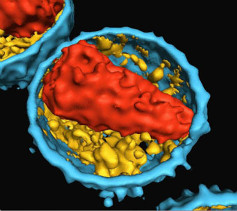
46% of MSM meth users
face GREATER RISK of HIV
infection, says recent US
study that establishes an
independent, CAUSATIVE
link. Poppers also a factor.